
Field notes for remote JK-BMS monitoring.
Engineering updates, compatibility notes, release announcements, and setup guidance.

How Much Power Does an Idle Inverter Use?
Inverter standby consumption can become a meaningful daily energy cost in small off-grid systems.

Monitoring Multiple Battery Banks
Separate banks may serve different loads, age differently, or operate at different temperatures even at the same site.

Transferring Gateway Ownership Safely
Selling or reassigning a gateway should transfer logical ownership without confusing the permanent hardware identity.
Battery Compartment Temperature and Ventilation
Battery compartments can run warmer or colder than the living space and may need chemistry-specific ventilation and separation.

Recognizing Abnormal Self-Discharge
A resting battery that loses charge faster than expected may have a parasitic load, measurement drift, contamination, or an internal issue.
How to Read Wi-Fi RSSI Without Overreacting
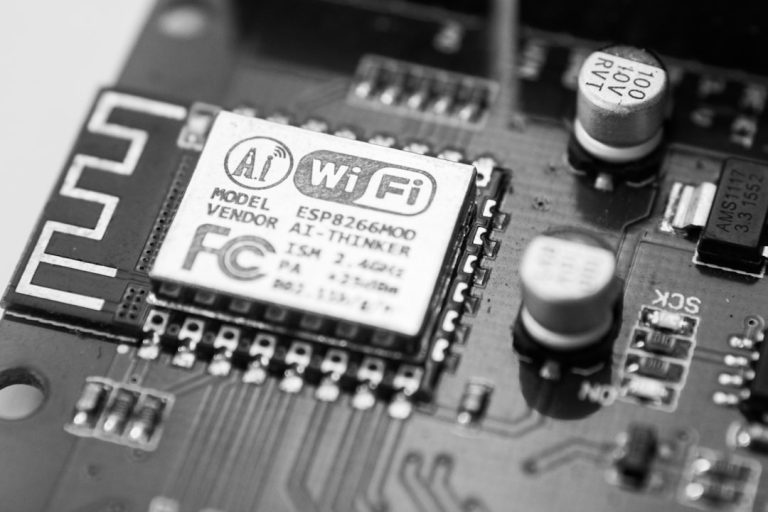
RSSI is a useful signal-strength indicator, but one reading does not capture interference, congestion, or packet loss.

Finding Slow Problems in Battery Trends
Loose connections, capacity loss, changing standby loads, and cooling problems may develop too slowly to notice live.

Corrosion, Resistance, and Marine Voltage Drop
Moisture and salt can increase connection resistance long before a circuit fails completely.

Verify Generator Charging with Data
Generator run time does not guarantee useful energy reached the battery.

Monitoring Is Not a Safety Controller
Remote dashboards improve awareness but can be delayed by Wi-Fi, power loss, software faults, or internet outages.

Reading Bulk, Absorption, and Float as a Trend
Charge stages are easiest to understand as a sequence of voltage and current behavior rather than as labels alone.
How to Choose Useful Alert Thresholds
An alert threshold should detect a meaningful condition early enough to act without generating constant noise.

A Practical Battery Capacity Check
A controlled discharge between known endpoints provides more useful capacity evidence than guessing from age or voltage.

Understanding Positive and Negative Battery Current
Current direction conventions differ between monitors, so charging may appear positive in one system and negative in another.

Why Coulomb Counters Drift
Current integration is valuable for estimating state of charge, but small measurement errors accumulate over time.
What Idle Really Means for a Battery Gateway
Idle usually describes low current flow, not a disconnected or inactive monitoring system.

Charging LFP Batteries in Cold Conditions
Low-temperature charging can require stricter limits than discharging, depending on the cell specification.

JKBMSR v1.4.2 Released: The 9-State Gateway Matrix
The nine-state matrix makes gateway condition easier to scan across a growing fleet.

What Cell Voltage Delta Actually Tells You
Cell delta is the gap between the highest and lowest cell voltage at a given moment, not a complete battery health score.

Why Pack Voltage Alone Is Not Enough
A normal-looking total pack voltage can hide one cell approaching a limit while another remains comfortable.

Remote Battery Monitoring Without a Local Server Stack
A cloud-connected gateway can provide useful battery visibility without maintaining a local computer, VPN, or home-automation server.

Passive vs Active Cell Balancing
Passive and active balancing address cell mismatch in different ways, with different power, heat, and timing tradeoffs.

Where Battery Temperature Sensors Matter
Temperature readings only represent the places where sensors are installed.

Why LFP Voltage Looks Flat Through Mid-Charge
Lithium iron phosphate cells have a relatively flat voltage region through much of their usable range.